
At the Onsen | Stillness, Steam and Ceremony
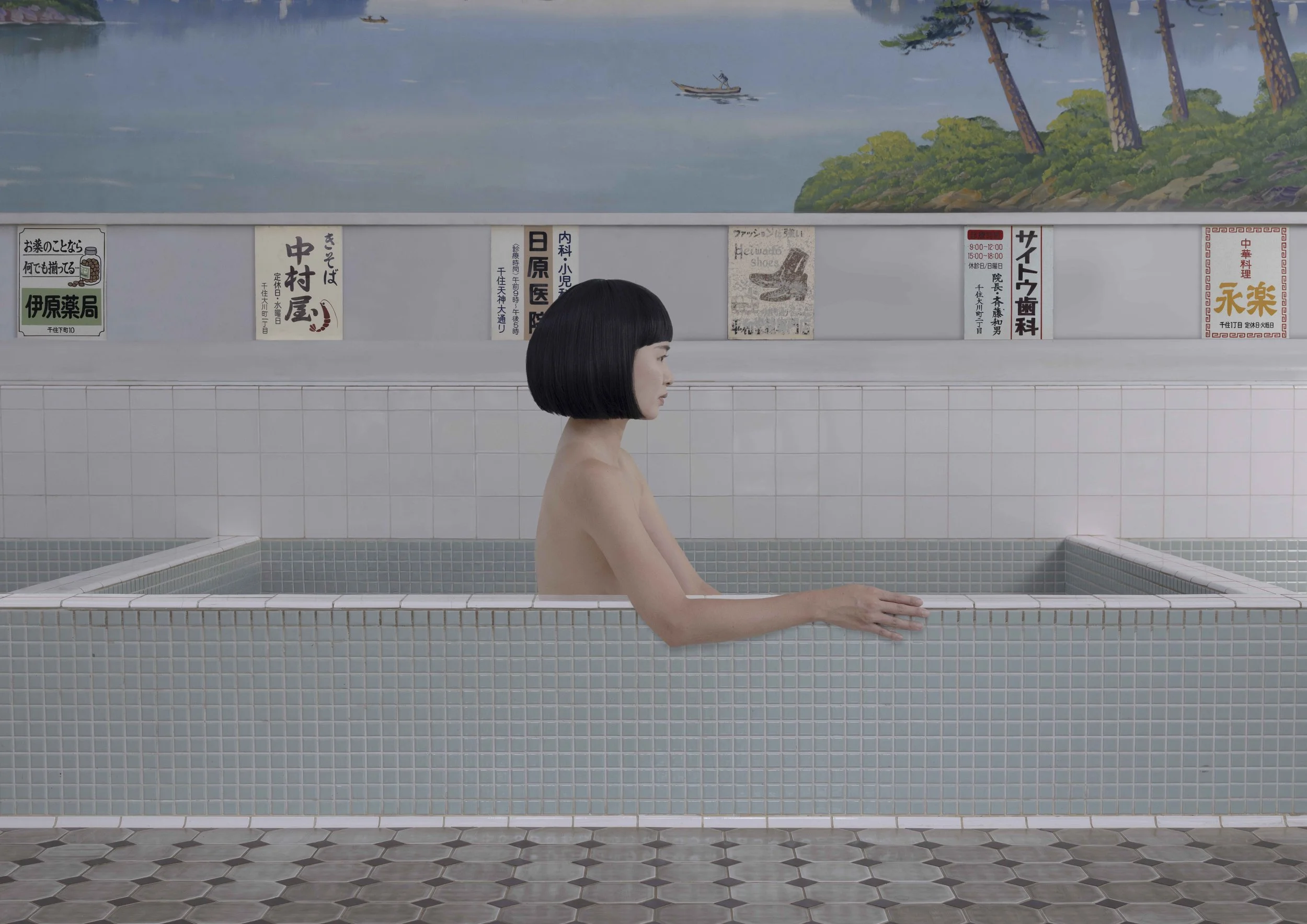
‘Leave the weight of life outside as you breathe into the quietness, sinking into the water, the heat seeping through your skin’
Soo has wanted to visit Japan for as long as she can remember. For years, she has been fascinated by Japanese culture and with the beautiful architecture, shrines and gardens. She was intrigued to dive deeper into the Japanese art of bathing, and to gain a greater understanding of the traditions around bathing and the importance of these healing waters.
She spent over a year planning this collection, and a lot of that time was spent researching bathhouses and selecting the ones she wanted to visit – which was a fascinating process. She connected with Hiro, who she was put in touch with through her friends at Accidentally Wes Anderson. Hiro traveled along side her and the team on the shoots, translating where necessary. She was also working with incredible models who understood her vision.
When they arrived in Japan, their journey began in the mountains of Nakanojō, along the Shima River, in the Gunma Prefecture. They drove past miles and miles of rice fields as their road wound higher and higher. Their destination was Sekizenkan, a historic inn that dates back to the 7th year of the Genroku era (the late 1700s), and its three buildings: Honkan, Sansou, and Kashotei.
Their room was within Sansou, a wooden building where you're enveloped by nature – the room looked out to the treetops, beyond the balcony with the sound of heavy rain tumbling through the branches and the water from the open air bath, this was the perfect setting start to creating the series.
The first shoot was at Genroku no Yu. This onsen was built in 1930, with five large stone baths, and the tall arched windows bathe the interior in natural light. When the sun appeared, shafts of sunlight poured into the space, softened by the condensation on the glass, creating this ethereal light. Working here, in this space, enveloped by the warmth, it felt as if time was slowing down.
One of the memories she will always hold from Sekizenkan was the food. They were presented with the most delicious food that looked like art. Every detail had been considered and designed to enhance the experience of this deeply grounding place.
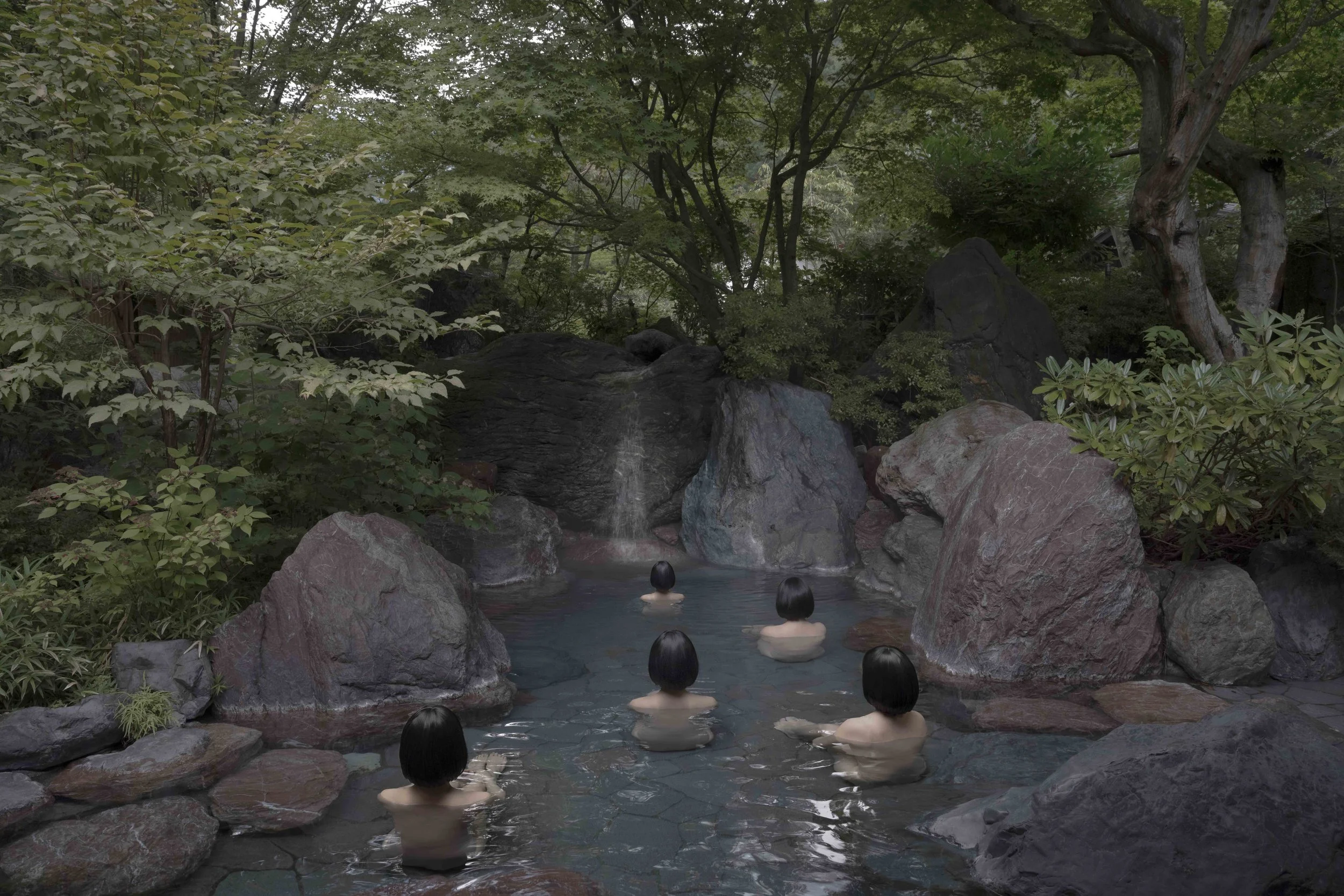
On the second day, they travelled higher into the mountains, with mist settling in layers around the giant cedar trees that lined their route, and arrived at Chojukan in the rain. There are three historic onsen at Chojukan: Hoshi No Yu, where the baths are housed in a timber Rokumeikan-style building; Tamaki No Yu, where you can choose between a large cypress bath and an open air bath below the stars; and Choju No Yu, which sits alongside the river.
Soo was photographing at Hoshi No Yu and Tamaki No Yu. She remembers walking into Hoshi No Yu and the intense heat just washing over her. After the incredible light of Genroku no Yu, this space had a very different mood. It was much darker, the wooden walls illuminated by lanterns, and she was struck by the textures in the timber and by the incredible craftsmanship in the rustic beamed ceiling. Built over a century ago, the spring water flows up from the bottom of the baths, gushing through gaps between the stones, and the water reflects the light from the windows and the green of the trees beyond.
While these baths are shared between men and women, the changing rooms are defined by their red and black fabric panels, and these spaces are also part of the traditions of the onsen.
The second location here, Tamaki No Yu, had a different mood again. A single large indoor bath sits below a heavy beamed roof, and you feel surrounded by the scent of the cypress wood and the rush of the spring water. A covered timber deck leads to the open air pool, which is enclosed by greenery and stone boulders. It's such a sensory experience to be here.
One of the most incredible things about this trip to Japan was something she couldn't have planned for or expected, and it was meeting the families who have owned and run these bathhouses – in some cases for centuries – and hearing their history. The team was truly welcomed. At Chojukan, they shared a traditional Japanese lunch with the family who have owned this onsen for generations. They sat and ate together, with Hiro translating, and then, as they left, the family and the staff lined the street to bid them farewell. Everything about these places felt unexpectedly life-changing, from the sense of calm in each onsen to the generosity and warmth of the people they encountered throughout this journey.
On the third day, they left the mountains behind and travelled by train to Tokyo for the first of two urban sento in Mejiro. Goshikiyu was reopened in September 2022 after being redesigned by architect Kentaro Imai, and the aesthetic here couldn't have been more different from the onsen. This was a contemporary space in the finishes and materials, with coloured-glass panels within the windows over the baths, and with an original painted-tile mural on one wall reflecting the history of the sento – a calm place to escape and to release the tensions of urban life.
They spent the morning at Goshikiyu, and in the afternoon headed to Unsuisen, which is close to the Mikawashima station in Tokyo. This traditional sento is known for the twin mural that extends along one wall, spanning both the men's and women's bathing spaces. While murals are typical, this piece was by the late sento mural master Toshimitsu Hayakawa, whose career spanned more than five decades, and it features Mt Fuji on the men's side and the Yatsugatake peaks on the women's side. It was a really interesting space to photograph with this backdrop.
On the fourth day, they went to a traditional bathhouse in Minami-Ku in Tokyo. Soo was drawn to photograph at Mitakeyu as the space is simple and authentic, with a clean palette in blue and white with soft pink accents, and again with a mural of Mt Fuji on the dividing wall. Generations of families have been welcomed into this calm place.
The following day they visited Koganeyu, a contemporary sento that reopened in 2020 after a transformation by architect Jo Nagasaka. There are several baths here, and in the main area artist Yoriko Hoshi painted a mural in the style of a picture scroll that spans both sides of the bathhouse – a very beautiful and understated feature that Soo wanted to use as a backdrop to the photos.
She also photographed in another part of the sento where exposed concrete walls create a wonderful texture, with a window connecting this space to an outdoor seating area beyond. For her, Koganeyu was a place of contrasts; a place where these traditional and contemporary visions meet.
On the sixth and final day on location, they travelled to Kodakara-yu, a public bathhouse dating from 1929 that was relocated from Senju Motomachi in Adachi Ward for preservation at the Edo-Tokyo Open Air Architectural Museum. With its temple-like appearance, this building is a classic example of a traditional 'Tokyo-style' bathhouse, complete with a mural of Mt Fuji and decorative painted tiling, while high-level windows cast shafts of light across the tiled floor, creating a beautiful soft light to shoot in.
Throughout this whole journey, Soo was fascinated by the conversations she had that gave her a much deeper understanding and appreciation of the culture of Japanese bathing. This has been rooted in daily life for centuries and it isn't only about the act of bathing. Hot springs such as the onsen at Sekizenkan, Hōshi Onsen and Tamaki Onsen have long been looked on as places for healing the body and mind. Historically, people would stay at an onsen for some time to treat illnesses or injuries. Now they're seen as places for healing as well as for rest and relaxation.
Nobuko Ikeda, the owner of Unsuisen sento in Tokyo, described how, historically, most homes didn't have baths. The sento was an integral part of daily life. These were spaces for the local community, where people met with their neighbours and friends. The sento was a place where children learned how to be part of their community. Now, with a younger generation, they are places to relax and unwind from the pace of modern life.
This idea of a bathhouse as a place of healing, or as a place of community, really spoke to Soo, as this feeling of community was also her experience when growing up and going swimming in her local pool in Edinburgh. Whether you're swimming or bathing, there's something deeply relaxing about this experience of being in water.
Photographing these onsen and urban sento was a different experience to the swimming pools she had been used to, as the architecture was so different, and the murals also shifted the feel of the spaces. But, again, she was working with geometry and blocks of colours, and they were fortunate to have really beautiful soft light that helped create an almost dream-like quality to these scenes.
Looking at this collection, it's hard to separate the works from the experience they had there – the things they saw, the fun they had with their amazing models, and the kindness of the owners of the bathhouses. Creating this collection was an experience Soo will never forget. It was about everything: the journey, the beauty of the landscape; travelling up into the mountains to shoot at Sekizenkan and Chojukan, with mist hugging the tall cedar forests. When she looks at this collection, she can remember and feel these experiences all over again.